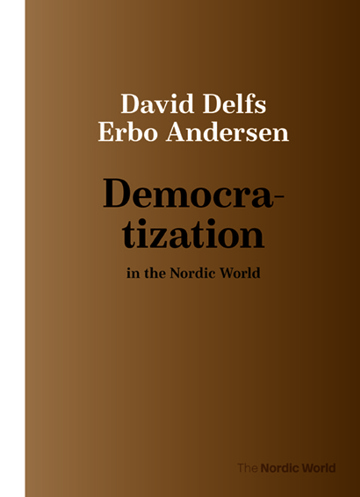
Democratization in the Nordic world
A part of the series The Nordic World (10) , and the subject area Social sciences
More about the book
About the book
Why are democratic politics in the Nordic countries comparatively peaceful and stable, dominated by compromise rather than conflict? The answer lies more than 100 years ago. Relatively strong and impartial state administrations facilitated the building of civil society movements and tolerated political party formation, leading to political change without revolutionary violence.
Political scientist David Delfs Erbo Andersen compares the formation of states and their impact on social classes and democratization from the sixteenth to the early twentieth centuries in Denmark, Norway, and Sweden in contrast with Prussia and France.
Karina Bell Ottosen

MSc in Information Science. Karina is responsible for the social sciences area, particularly the development of the series The Nordic World and Magtudredningen 2.0. She is our Foreign Rights manager and in charge of Aarhus Universitetforlag's international profile, including co-publishing with American and British university presses. Karina has a background as an editor at Gyldendal Academic and Forlaget Ajour.