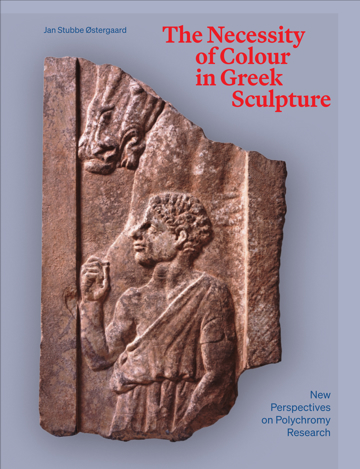
The Necessity of Colour in Greek Sculpture
New Perspectives on Polychromy Research
A part of the subject area Archaeology (classical)
More about the book
About the book
Ancient Greek marble sculpture was never simply white. Colour was an integral part of its visual impact, meaning, and function.
This book explores the significance of colour, or polychromy, in high-grade Greek marble sculpture and presents the history, methods, and key themes of polychromy research. Covering the period from the sixth to the first century BCE, it advances three interconnected propositions that challenge established understandings of Greek visual culture.
First, it argues for a fundamental correspondence between sculptural form and the polychromy applied to it, demonstrating that colour and form were conceived as a unified whole. Second, it shows that the development of sculpture and its polychromy can only be fully understood in relation to the communicative roles sculptures fulfilled within the public spaces of the Greek city-state. Finally, it questions the uncritical application of the modern concept of “art” to Greek visual culture, arguing that this has obscured important aspects of the historical development and function of Greek sculpture.
Together, these propositions constitute a significant shift in our understanding of Greek sculpture and visual culture. Combining original interpretation with a broad survey of research, the book offers an important resource for scholars, museum professionals, teachers, and students of Classical Archaeology, as well as for anyone interested in the art and culture of the ancient world.