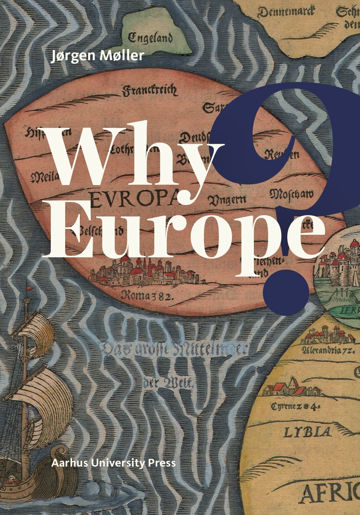
Why Europe?
A part of the subject areas Social sciences, and History
More about the book
About the book
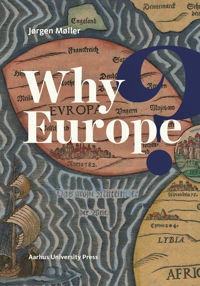
Why Europe? What made Western and Central Europe, long an economic and political backwater compared with the other great agrarian civilisations of Eurasia, the cradle of modernity?
This short book argues that the crucial juncture occurred in backward medieval Europe when a reform movement within the Catholic Church challenged lay rulers’ hold over the appointment of bishops. This eleventh-century rupture sundered religious and lay power, and meant that European emperors, kings, and princes henceforth had to tread a fine line: caught between the opposition they encountered from strong social groups such as townsmen, nobles, and Catholic clergy and from other European rulers.
What Karl Marx dismissively referred to as the “medieval rubbish” nurtured the seeds of modern Europe – the modern state, the modern market economy, and modern democracy – by creating power pluralism between and within political units.
Jørgen Møller has a PhD from the European University Institute in Florence, Italy, and is currently professor of Political Science at Aarhus University. His research focuses on European history. He has published books about the role of the Catholic Church in European state formation and about the politics of succession. He is also the author of books on international relations and democracy and democratization.
For purchases outside of Denmark:
If you are located in the USA or Canada, please contact our US distributor, Longleaf Services, at Orders@longleafservices.org or +1 919-503-6590
For purchases in all other countries, you can find the title through our global distributor, The Mare Nostrum Group, here: https://mngbookshop.co.uk
Table of contents
Excerpt
Press reviews
Kristeligt Dagblad
Interview: "Den katolske kirkes rolle i dannelsen af det moderne Europa har været undervurderet"
28.07.2026